Painting

Venice herself had not grown less beautiful in her decline. Indeed, the building which occupies the very centre of the picture Venice leaves in the mind, the Salute, was not built until the seventeenth century. This was the picture that the Venetian himself loved to have painted for him, and that the stranger wanted to carry away.

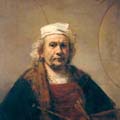
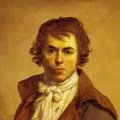
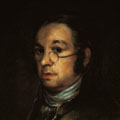
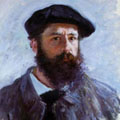
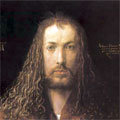
The longing for the perpetuation of one's fame, which has already been mentioned several times as one of the chief passions of the Renaissance, brought with it the more universal desire to hand down the memory of one's face and figure. The surest way to accomplish this end seemed to be the one which had proved successful in the case of the great Romans, whose effigies were growing more and more familiar as new busts and medals were dug up.

But delightful as Longhi, Canale, and Guardi are, and imbued as they are with the spirit of their own century, they lack the quality of force, without which there can be no really impressive style. This quality their contemporary Tiepolo possessed to the utmost. His energy, his feeling for splendour, his mastery over his craft, place him almost on a level with the great Venetians of the sixteenth century, although he never allows one to forget what he owes to them, particularly to Veronese.

Giorgione's followers had only to exploit the vein their master hit upon to find ample remuneration. Each, to be sure, brought a distinct personality into play, but the demand for the Giorgionesque article, if I may be allowed the phrase, was too strong to permit of much deviation. It no longer mattered what the picture was to represent or where it was going to be placed; the treatment had to be always bright, romantic, and joyous.

But even while such pictures were being painted, the spirit of the Italian Renaissance was proving inadequate to life. This was not the fault of the spirit, which was the spirit of youth. But youth cannot last more than a certain length of time. No matter how it is spent, manhood and middle age will come. Life began to show a sterner and more sober face than for a brief moment it had seemed to wear. Men became conscious that the passions for knowledge, for glory, and for personal advancement were not at the bottom of all the problems that life presented.

Thus, Venetian painting before it wholly died, flickered up again strong enough to light the torch that is burning so steadily now. Indeed, not the least attraction of the Venetian masters is their note of modernity, by which I mean the feeling they give us that they were on the high road to the art of to-day. We have seen how on two separate occasions Venetian painters gave an impulse to Spaniards, who in turn have had an extraordinary influence on modern painting.

Flanders formerly embraced a larger part of Belgium than is contained in the present Belgian provinces of East and West Flanders. It also covered a portion of Holland and some territory in the northwest of France. The principal Flemish towns connected with the story of Flemish art were Bruges, Tournai, Louvain, Ghent, Antwerp, Brussels, Mechlin, Liege, and Utrecht.

Spanish painting had its birth during the reign of Ferdinand and Isabella, and may be said to have been derived from Italy, through the influence of the Italian painters who went to Spain, and the Spanish artists who made their studies in Italy. But in spite of this strong Italian influence Spanish painting has its own characteristics which separate it from all other schools, and give it a high position on its own merits.Antonio del Rincon (1446-1500) was the first Spanish painter of whom we know.

The French school of painting does not date earlier than the sixteenth century, and the painters of that time were few in number, and little is known of them. Before the time when a French school could be said to exist the kings of France employed foreign artists to decorate their palaces and churches, and they naturally turned to the Italians for all that they needed. Hence it happened that in its earliest days the French school was almost entirely under Italian influence, and I shall first speak of French masters who studied in Italy.

Syndicate content